

Politics is an intricate web of relationships, ideologies, and power dynamics that shape the governance of societies. At its core, politics involves the distribution of power and resources, the formulation of laws, and the establishment of social norms. It is a field that encompasses a wide array of activities, from the mundane to the monumental, influencing every aspect of human life.
The study of politics is not merely an academic pursuit; it is a vital component of civic engagement and societal development. Understanding political structures and processes is essential for individuals who wish to navigate the complexities of modern governance and contribute meaningfully to their communities. The significance of politics extends beyond the confines of government institutions.
It permeates various facets of daily life, including education, healthcare, and economic opportunities. Political decisions can determine the quality of public services, the allocation of funding for social programs, and even the rights and freedoms afforded to citizens. As such, engaging with political issues is crucial for fostering informed citizenry capable of advocating for their interests and holding leaders accountable.
In an era marked by rapid change and global interconnectivity, the importance of understanding political dynamics has never been more pronounced.
Key Takeaways
- Politics is the process of making decisions that apply to members of a group, and it involves the study of power and the distribution of resources within a society.
- The political spectrum includes left, right, and center ideologies, with left leaning towards social equality, right leaning towards individual freedom, and center seeking a balance between the two.
- Political systems can be categorized into democracy, autocracy, and oligarchy, each with distinct characteristics and power distribution.
- Political parties and ideologies play a crucial role in shaping the policies and direction of a country, with different parties representing various beliefs and values.
- The media plays a significant role in politics by shaping public opinion, providing information, and holding political leaders accountable.
The Political Spectrum: Left, Right, and Center
Leftist Ideologies
Traditionally, the left side of the spectrum are associated with progressive or liberal ideologies that advocate for social equality, government intervention in the economy, and the protection of civil rights. Leftist movements often emphasize collective welfare and seek to address systemic inequalities through policies such as universal healthcare, education reform, and environmental protections. Historical examples include socialist movements in Europe and the New Deal policies in the United States during the 1930s.
Rightist Ideologies
Conversely, the right side of the spectrum is characterized by conservative ideologies that prioritize individual liberties, free-market principles, and limited government intervention. Right-leaning parties often advocate for lower taxes, deregulation, and a strong national defense. They may also emphasize traditional values and social norms.
The Center and the Rise of Populism
The center of the political spectrum typically represents moderate positions that seek to balance leftist and rightist ideologies, often advocating for pragmatic solutions rather than strict adherence to ideological purity. The rise of right-wing populism in recent years has further complicated this landscape, as leaders like Donald Trump in the United States and Jair Bolsonaro in Brazil have harnessed nationalist sentiments to gain support.
Political Systems: Democracy, Autocracy, and Oligarchy
Political systems can be broadly categorized into three main types: democracy, autocracy, and oligarchy. Democracy is characterized by the participation of citizens in decision-making processes through free and fair elections. In democratic systems, power is derived from the consent of the governed, and there are mechanisms in place to protect individual rights and freedoms.
Examples of democracies include countries like Canada, Germany, and India, where citizens have the right to vote for their representatives and influence policy decisions. In stark contrast, autocracy refers to a system where power is concentrated in the hands of a single ruler or a small group of individuals. Autocratic regimes often suppress dissent and limit political freedoms to maintain control over the populace.
Historical examples include North Korea under Kim Jong-un and Russia under Vladimir Putin, where political opposition is stifled, media is controlled, and civil liberties are curtailed. Oligarchy represents a hybrid form where power resides with a small elite group that may not necessarily be hereditary rulers but rather individuals who wield significant economic or political influence. This can be seen in certain aspects of modern governance where corporate interests heavily influence policy decisions.
Political Parties and Ideologies
| Party/Ideology | Key Beliefs | Main Supporters |
|---|---|---|
| Conservative | Traditional values, limited government, free market | Business owners, religious groups |
| Labor | Workers’ rights, social welfare, progressive taxation | Labor unions, low-income individuals |
| Libertarian | Individual freedom, minimal government intervention | Libertarian Party members, small government advocates |
| Green | Environmentalism, social justice, nonviolence | Environmental activists, social justice advocates |
Political parties are essential components of democratic systems, serving as vehicles for organizing political beliefs and mobilizing voters. They provide a platform for candidates to present their ideas and policies while also facilitating public discourse on critical issues. In many countries, political parties align themselves with specific ideologies that guide their positions on various matters.
For instance, in the United States, the Democratic Party generally aligns with progressive values such as social justice and environmental sustainability, while the Republican Party tends to advocate for conservative principles like fiscal responsibility and limited government. The ideological landscape is not static; it evolves over time in response to changing societal values and emerging challenges. For example, the rise of environmentalism has led many traditional parties to adopt green policies or even spawn new parties focused solely on ecological issues.
In Europe, this has resulted in the emergence of Green parties that prioritize sustainability alongside social justice. Additionally, political parties often engage in coalition-building to achieve legislative goals, particularly in systems with multiple parties where no single party holds a majority.
The Role of Media in Politics
The media plays a pivotal role in shaping public perception and influencing political discourse. It serves as a conduit for information dissemination, providing citizens with news about government actions, policy debates, and electoral processes. In democratic societies, a free press is considered a cornerstone of accountability; it enables journalists to investigate corruption, expose injustices, and hold public officials accountable for their actions.
Investigative journalism has historically played a crucial role in uncovering scandals such as Watergate in the United States or corruption cases in various countries around the world. However, the media landscape has undergone significant transformation with the advent of digital technology and social media platforms. While these innovations have democratized information access and allowed diverse voices to emerge, they have also given rise to challenges such as misinformation and echo chambers.
The proliferation of fake news can distort public understanding of critical issues and polarize opinions further. As a result, media literacy has become increasingly important for citizens who must navigate this complex information environment to make informed political decisions.
Understanding Political Campaigns and Elections
Political campaigns are essential mechanisms through which candidates communicate their platforms to voters and seek election to public office. These campaigns often involve extensive planning, fundraising, and strategic messaging aimed at mobilizing support. In contemporary politics, campaigns leverage various tools such as social media advertising, grassroots organizing, and data analytics to reach potential voters effectively.
The 2008 presidential campaign of Barack Obama exemplified this shift; it utilized digital platforms to engage younger voters and build a robust grassroots network that ultimately contributed to his electoral success. Elections serve as a critical juncture in democratic governance; they provide citizens with an opportunity to express their preferences regarding leadership and policy direction. The electoral process can vary significantly across different political systems—some countries employ proportional representation while others utilize first-past-the-post systems.
The design of electoral systems can influence party dynamics and voter behavior; for instance, proportional representation often leads to multi-party systems where coalition governments are common. Understanding these nuances is vital for comprehending how elections shape political landscapes.
Advocacy and Activism in Politics
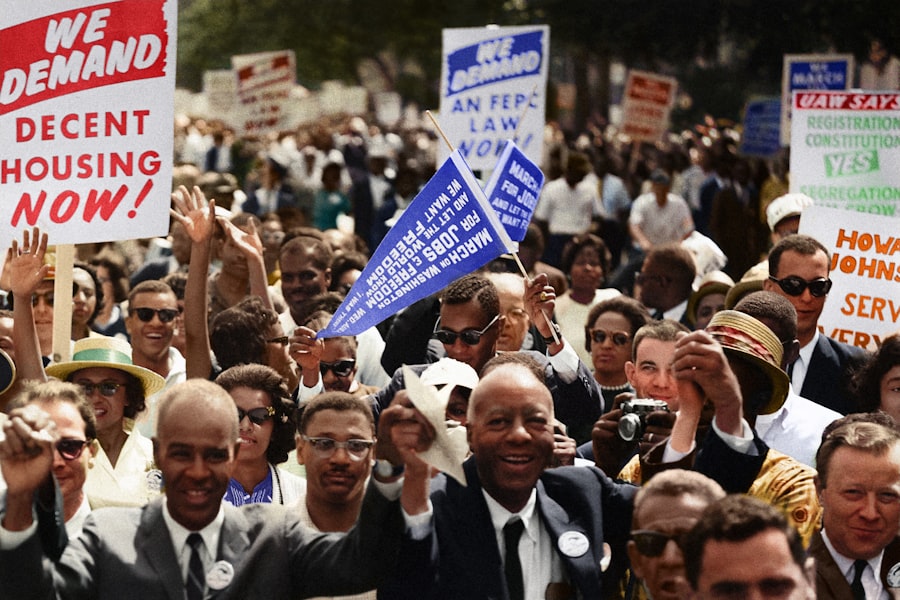
Advocacy and activism are integral components of political engagement that empower individuals to influence policy decisions and promote social change. Advocacy typically involves organized efforts aimed at persuading policymakers to adopt specific positions or enact legislation on particular issues. This can take many forms—from lobbying efforts by interest groups to grassroots campaigns led by community organizations focused on issues like healthcare reform or climate action.
Activism often encompasses more direct forms of engagement such as protests, demonstrations, or civil disobedience aimed at raising awareness about pressing social issues. Movements like Black Lives Matter or climate strikes led by youth activists have garnered significant attention globally by mobilizing large numbers of people around shared causes. These movements highlight how collective action can challenge existing power structures and demand accountability from those in positions of authority.
The intersectionality of various movements also underscores the importance of solidarity among different advocacy groups working toward common goals.
The Importance of Political Engagement
Political engagement is essential for fostering a vibrant democracy where citizens actively participate in shaping their governance. Engaged citizens are more likely to be informed about political issues, advocate for their rights, and hold elected officials accountable for their actions. This engagement can take many forms—voting in elections is perhaps the most fundamental expression of civic duty; however, it extends beyond mere participation at the ballot box.
Community involvement through local organizations or advocacy groups can amplify voices that might otherwise go unheard in mainstream politics. Engaging in discussions about policy issues at town hall meetings or participating in public forums allows individuals to contribute their perspectives while also learning from others’ experiences. Moreover, political engagement fosters a sense of belonging within communities; it cultivates relationships among individuals who share common interests or concerns about societal challenges.
Ultimately, an engaged citizenry is vital for ensuring that democratic institutions remain responsive to the needs and aspirations of all members of society.
If you are interested in delving deeper into the world of politics, you may want to check out the article titled “They Simply Dummy the Printing” on Patriot Blog. This article discusses the intricacies of political messaging and how it can influence public opinion. Understanding the tactics used in political communication is crucial for anyone looking to navigate the complex landscape of politics. You can read the article here.